THE PALEONTOLOGY OF U.S. STEEL

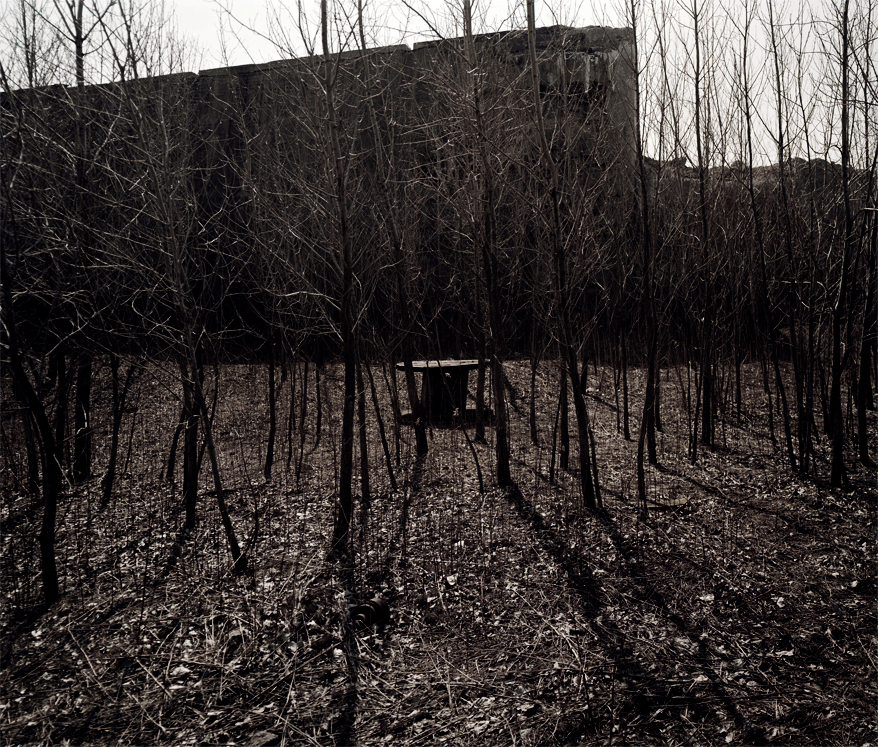
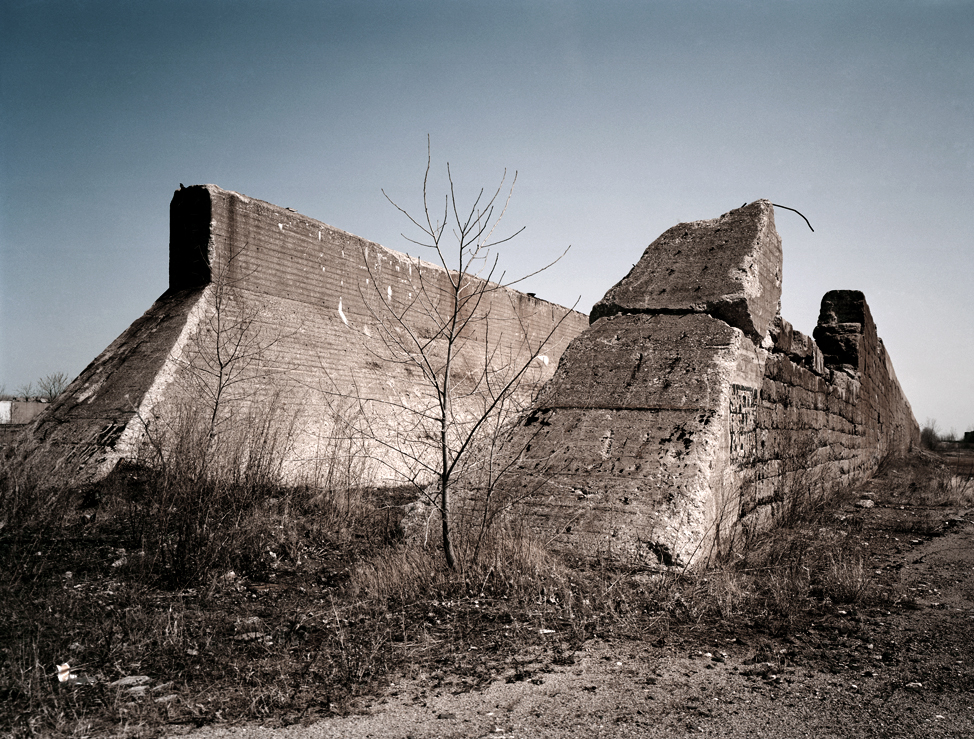
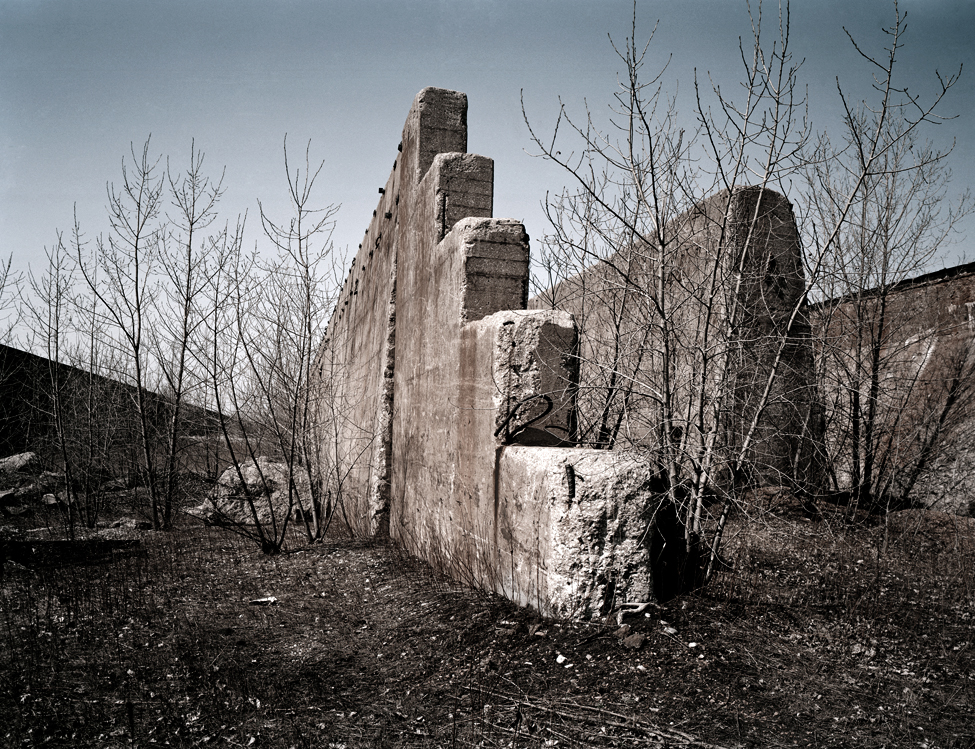
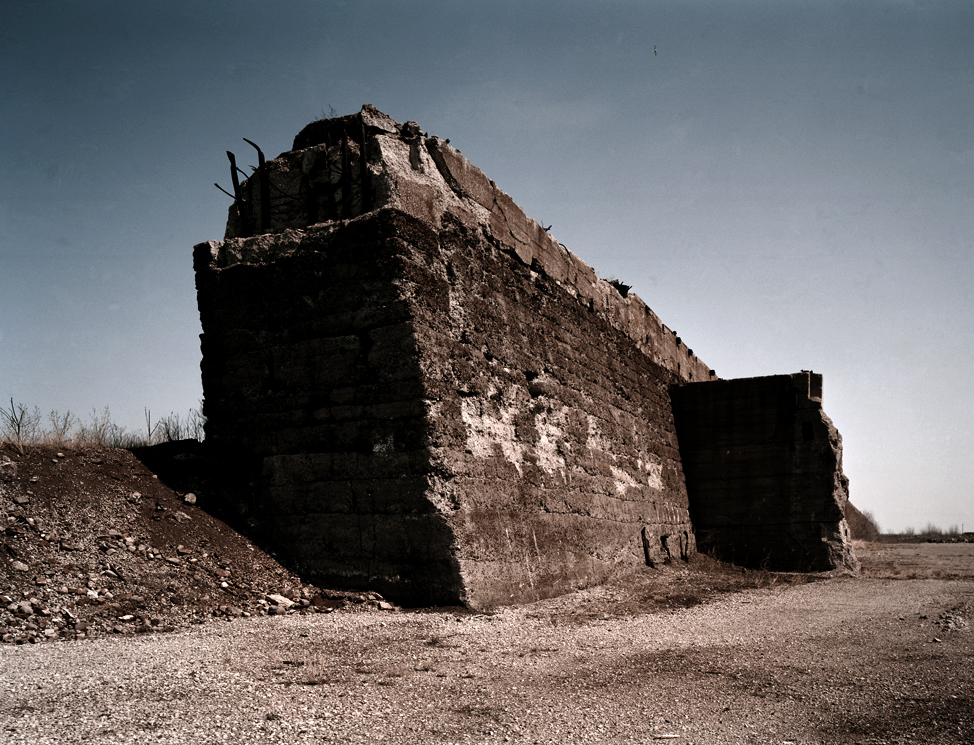
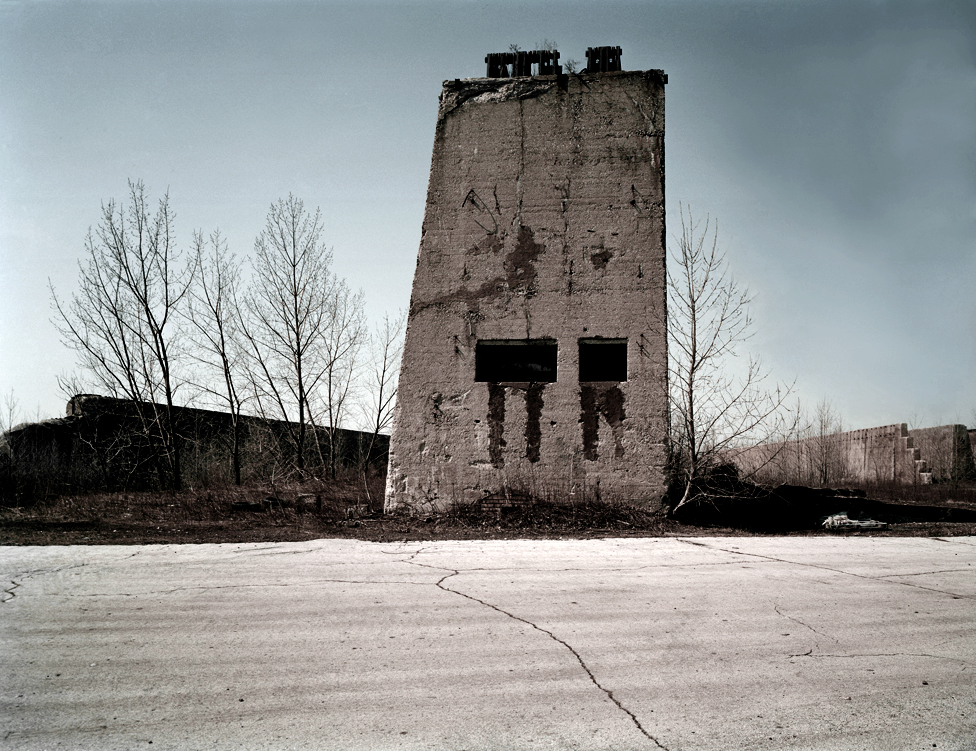
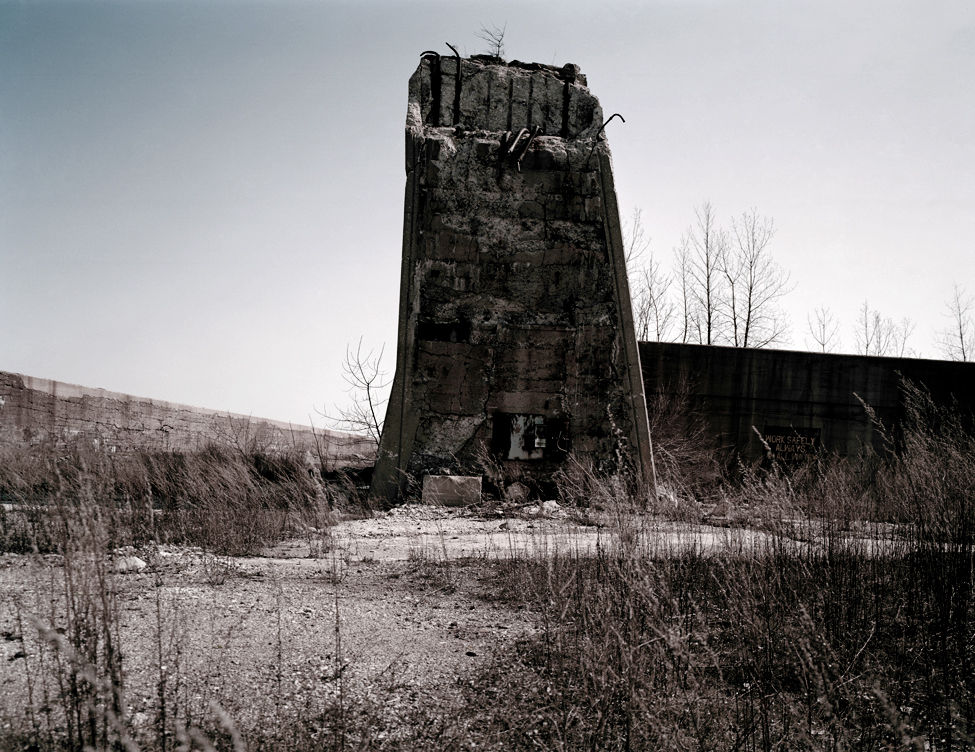
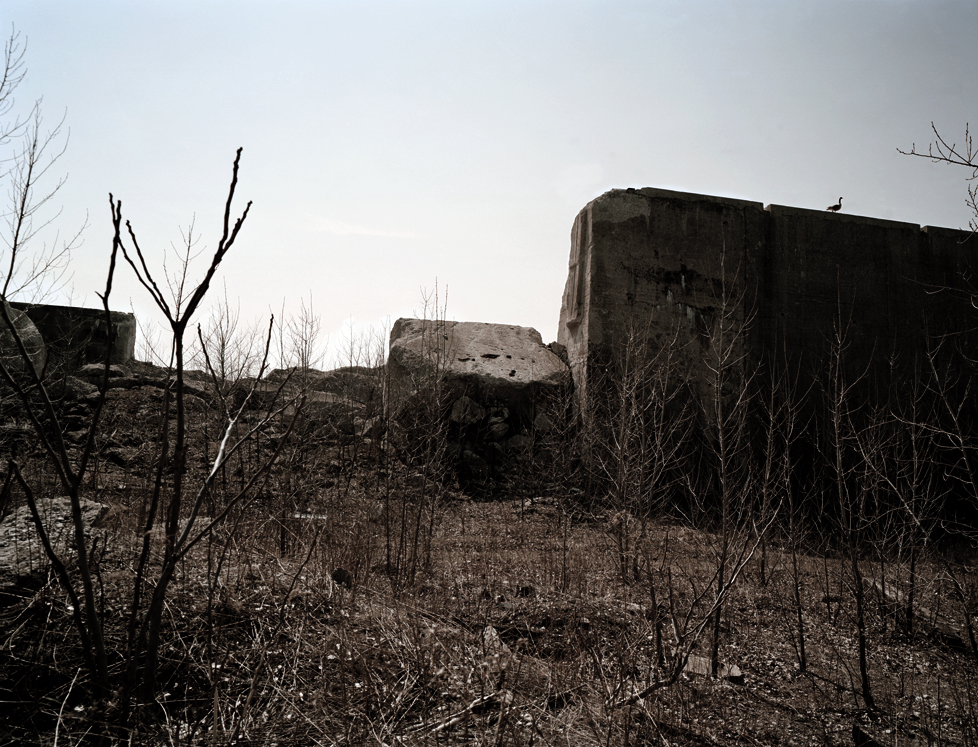
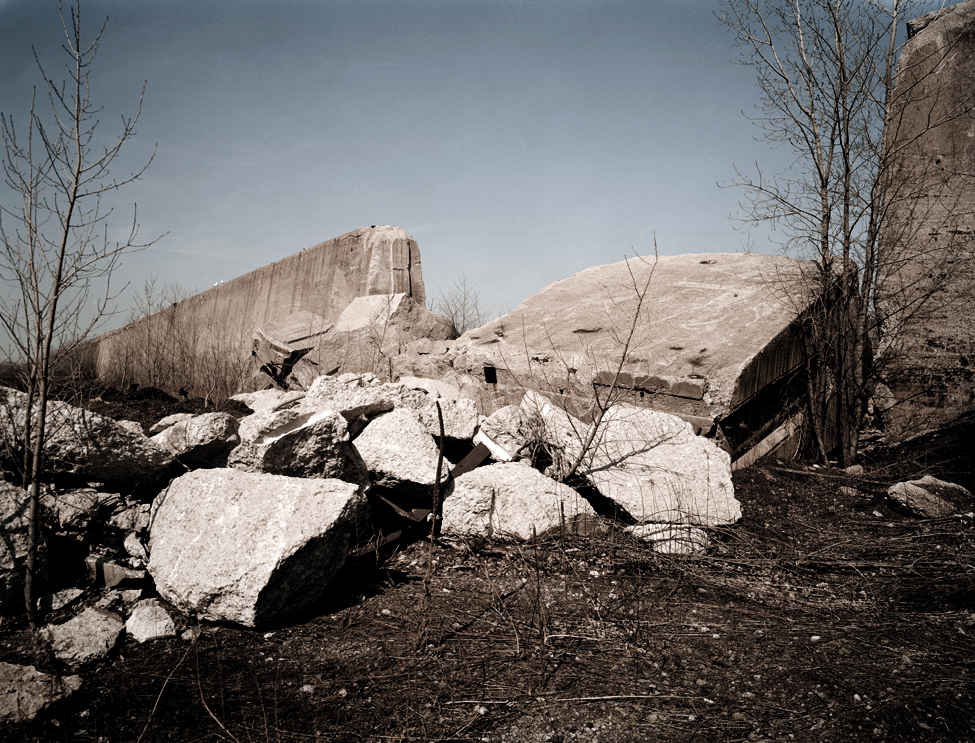
The gigantic ore walls facing the lake's horizon recall cold war bunkers, abandoned missile sites and the anthropological landscape of a future world.

"Sometimes he wonders what zone of transit he himself was entering, sure that his own withdrawal was symptomatic not of a dormant schizophrenia, but of a careful preparation for a radically new environment, with its own internal landscape and logic, where old categories of thought would be merely an encumbrance."

- JG Ballard, The Drowned World

Technology makes its own boneyards, the discarded shells, or catastrophic evidence, of the conditions of human life.


…In January, Planetologists spread throughout terra with the latest in Phantom technology (Series IV) to research the more significant geo-chemical remnants of the Industrial Age. A senior Official funding the expeditionary research forces (who wishes to remain anonymous fearing retribution from several interested splinter groups), confirmed: “the first site found, was indeed, one of the largest steel production facilities for upwards of a century.” The site, located within the SE/Chicago/Ill/UState Sigma-Lot, once consuming near 600 acres of artificial land, now erodes at an accelerated rate due to extreme seasonal temperature changes and isochronal flooding, except in anomalous regions of unusually excessive human intervention dated from the mid-19th century onward.

At present, Planetologists believe the anomalous centers of resistance (to elements, natural and synthetic) were originally built upon Slag: a by-product of steel production, produced when molten steel separates from its impurities in ‘steel-making’ furnaces. More specifically, it is a complex solution of silicates and oxides, materializing as a molten liquid melt, solidifying only when cooled. The Official corroborated previous theories that Slag, “remains extremely resistant to heat and water, melting only when temperatures well exceed 1000°C.”

The resulting landscapes, popularized most recently in virtuomeda, are the product of multiple transformations amassing over what is now conjectured to be decades not centuries, as Slag is increasingly exposed to high levels of toxicity found in both lake water and widespread acidic rains (once specific to NW/Yukon/Can Zeta Lot). Localized deposits of roseate-colored translucent minerals appear above eroded surfaces surrounding the centers of resistance. Phantom technology (Series III) previously analyzed the minerals, documenting their growth from stripped sedimentary rocks (bearing opposing chemical helio-structures). It remains for Series IV to determine what the (dis)advantages of the inexplicable crystalline-like formations may be.

“There is no precedent for mineral deposits like this one,” the Official indicated. “The pinkish hue has thus far left all Helioticians baffled, especially considering that within the site, the mineral’s compound growth structure varies by locations as close as a meter. At times it develops like a Rhodochrosite, but exhibits none of its other properties.” Without answers in sight, theories abound, but both Planetologists and Helioticians agree that there was a prolonged symbiotic chemical reaction intensified when the mineral deposits first came in contact with Slag (circa. mid-20th century).

Most baffling was the discovery of a male/human found above ground at the site’s third quadrant. Phantom technology discerned breathing patterns, but found him otherwise unresponsive to the equipment’s probing tentacles. The Official explained: “at specific temperatures, the minerals generate electrical-transport properties. Prolonged exposure to their electro-magnetic field may have preserved his physical body, suspending him between life and death. Without conclusive evidence, however, we cannot speculate exactly how this affects us.” Before concluding, the Official revealed Series IV as but an infant of Phantom technology: “limitations, for both the site and technology, do not yet exist. Once the crystalline-like formations are better understood, we hope not to open a new chapter, but an entire library…”

-----------------------------------------------------------------------------

Once covered by more than 100 feet of water, much of northeastern Illinois and coastal Indiana were initially shaped by Lake Michigan (and its predecessor).

After the lake’s recession, the Calumet region developed wetlands, prairie, and dunes that were largely undisturbed for millennia, bordered by coastlines that were shaped by fluctuations in lake level and the southerly flow of sediment.

Humans first left their mark on the Calumet approximately 12,000 years ago when Paleo-Indian groups set fires to procure resources. Hunting trails divided the region, and an occasional village was founded. But the environment was largely undisturbed – even after Europeans and other settlers developed much of the area near the Chicago River.

Railroad tracks and the occasional road were the most intrusive human impositions in the Calumet until the 1860s-1870s, when the region was promoted as a burgeoning industrial paradise that would ease land demand north of young Chicago.

From this early start, the land and coastline were dramatically changed. To literally open the region for development, the Army Corps of Engineers and businesses straightened the course of the Calumet River, built harbors and breakwaters, and began to fill in land with material dredged from the lake and rivers – in the insidious language of the day, to “reclaim” it.

To meet demand from increased Westward expansion, on March 28, 1880, the North Chicago Rolling Mill Company bought 73 acres bound on two sides by the lake and the redirected river to build the world’s first integrated rail mill. Immediately, the Company began dumping slag and industrial refuse into the lake to expand its landholdings.

Steel production boomed. Hundreds, then thousands of jobs were added to the complex over the next several decades, creating numerous communities and greatly contributing to the development of the South Side. As land mass was added, additional facilities were build on the site. Perhaps most curiously from the perspective of today’s visitor, a number of massive concrete walls were constructed as giant bins for iron ore, the raw material from which steel is made. The largest of these walls are a half-mile long and dozens of feet high.

After briefly changing hands to another firm, United States Steel bought the Works and executed a major “reclamation” plan, expanding the site to its current size of 576 acres during approximately 25 years.

Sixty years later, still-disputed factors such as misdirected investment and globalization led to the gradual closing of the Works from 1983 to 1992.

The legacy of this industrial behemoth is a thoroughly human-made site: a place that simply did not exist 125 years ago. While all but two buildings were leveled by the late 1990s, the ground itself is a combination of industrial waste products, networks of pipes, and building foundations for once-mammoth buildings.

Nonhuman actors have reclaimed the site over the last decade, although only temporarily so. Human sculpted recreational parkland has been platted for the lakeshore, and much of the southern half of the site is being converted to a plastic cup factory. How long the existing nonhuman animal and plant life will inhabit the rest of the site remains to be seen.- David Schalliol, 2004

-------------------------------------------------------------------------------

All photographs are Lambda Prints mounted on Sintra, 30" x 24"